Embleton Quarry Nature Reserve boasts a large range of wildflowers which are a crucial element of the quarry’s ecosystem. Many insects rely on the wildflowers. These insects are important pollinators and also a food source for birds and bats etc.
Much of the surrounding landscape has been nutrient enriched by decades of agricultural fertiliser use. As a result, many flowers that were once common in the wider countryside have become much rarer or vanished altogether. The Nature Reserve provides a rare island of habitat
where many of these flowers still exist. The soil here remains unfertilised and lower nutrient levels provide good conditions for wildflowers to flourish.
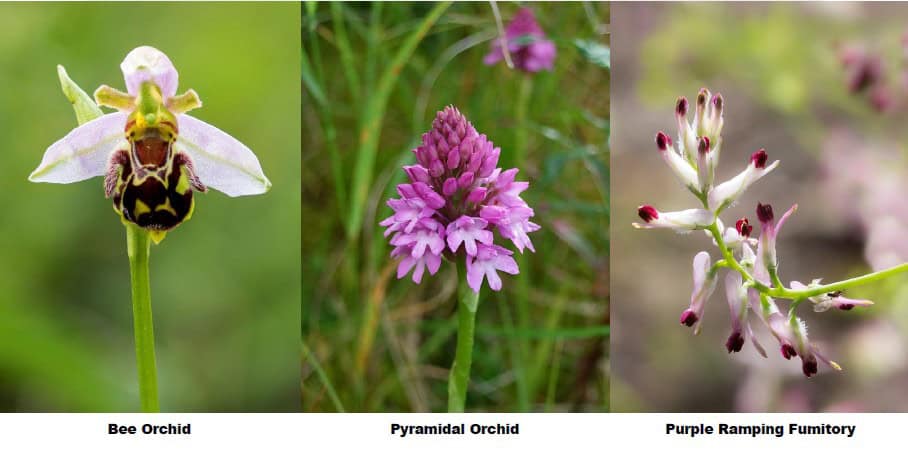
In the summer some regular flowers to look out for include Common Knapweed, Bird’s-foot Trefoil, Selfheal, Lady’s Bedstraw and Meadow Buttercup. The much rarer Purple Ramping Fumitory can also be found at the quarry, which is thought to be one of the few remaining sites
in Northumberland for this species.
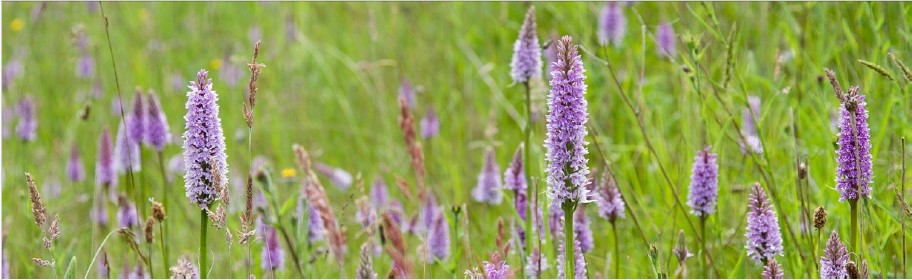
Some of the most spectacular flowers to be found at the quarry are the four species of orchid present: Northern Marsh Orchid, Pyramidal Orchid, Common Spotted Orchid and the locally rare Bee Orchid.
We are using grazing animals on the Nature Reserve to help restore flower rich grassland areas. These herbivores play an important role for wildflowers; they help to open up areas dominated by dense grasses and invasive scrub and also help to disperse flower seeds.